Dr. Vézina maps your new hairline against your facial structure — bone proportions, brow position, the way you actually wear your hair. The shape is drawn on you, reviewed with you, and finalized only with your agreement.
The hairline that
should have been yours.
A permanent, physician-performed hair restoration — boutique care in Montréal and Toronto. Not a new you. The version of you that you remember.
The Revio
difference.
Thinning hair changes the way you see yourself long before anyone else notices. By the time others do, you have already been carrying it for years. A hair transplant does not make you someone new — it returns the version of you that you remember.
At Revio, every surgical incision in your hair transplant is performed by Dr. Vézina herself — the donor harvesting punches, the recipient sites, and the hairline design. The non-incisional supporting work — extracting follicles from the scored sites, preparing them under microscope, and implanting each graft into the recipient site Dr. Vézina has created — is performed by our lead technician under direct physician oversight.
This is the model Canadian medical law requires, and the one too many clinics quietly ignore. At Revio, the physician you meet is the physician whose hand performs every incision.
What is a
hair transplant?
A hair transplant is the surgical relocation of hair follicles from an area of the scalp where they are genetically resistant to loss — typically the back and sides — to an area that has thinned or gone bare.
The technique we use is FUE — Follicular Unit Extraction. Each follicle is extracted individually, prepared under microscope, and implanted one at a time at the precise angle, depth, and direction that will look natural in your specific face.
Because the relocated follicles retain their genetic resistance, they continue to grow — for life — in their new position. This is what makes a hair transplant permanent.
Why a "factory"
transplant isn't the same.
Most large-volume clinics — whether abroad or in major Canadian cities — operate as factories. A physician marks the area, then leaves. Technicians perform the extractions and implantations on several patients in parallel. Speed is the operating constraint, not precision.
The visible consequences are well-documented:
- Pluggy, "wig-like" density from grafts placed without artistic planning.
- Unnatural hairlines that read as surgical at conversational distance.
- Visible donor-area scarring from rushed extraction.
- Depleted donor capacity that limits or prevents future procedures.
A hair transplant cannot be redone like an outfit. The donor area is finite. The first surgery sets the ceiling on every surgery that comes after it. This is why we do not believe a hair transplant should be a volume business.
Natural density,
by design.
Before any extraction, Dr. Vézina maps the architecture of your future hairline against your facial proportions, age, and existing growth pattern. The plan is not a template. It is yours.
- Single-hair grafts at the hairline.
Natural hairlines are composed of soft, single follicles — not pluggy clusters. We never use multi-hair grafts at the most visible edge.
- Multi-direction implantation.
Hair does not grow in one direction. Behind the hairline, Dr. Vézina varies the angle and direction of each graft to replicate the natural whorl and flow of a healthy scalp.
- Density planned to your donor reserve.
A responsible physician never extracts more than your donor area can afford. We plan with your future in mind, not just the result today.
- Microscope-prepared follicles.
Each graft is examined and prepared under high-power magnification before placement. Damaged follicles are discarded, not implanted.
Who this
is for.
A hair transplant is the right answer for patients with stable, sufficient donor hair who want a permanent restoration — not an indefinite regimen of medication or concealment. It typically suits:
- ✓Receding hairlines stabilized at a level that allows for natural design.
- ✓Crown thinning where donor capacity supports adequate density.
- ✓Scarring from accidents, surgery, or earlier hair transplants.
- ✓Restoration after hormonal or autoimmune hair loss, once medically stable.
- ✓Patients who have used medical therapy and now want a lasting visual result.
Not everyone is a candidate, and we will tell you so directly. A consultation begins with whether a transplant is right for you — not the assumption that it is.
 Designed to your face
Your procedure
with Dr. Vézina.
Four stages — and the physician's hand on every incision.
Dr. Vézina personally performs the donor harvesting punches — fine-caliber scoring at the angles that minimize transection and visible scarring. Under her direct oversight, the lead technician then extracts each scored follicle and prepares the grafts under high-power magnification: single, double, and triple grafts sorted and quality-checked for placement.
Dr. Vézina creates every recipient site by hand, controlling depth, angle, and direction. This is the surgical act that determines whether the final result looks natural or surgical. It is also the act most often delegated to technicians elsewhere. At Revio, it is hers — every site.
With every recipient site precisely created by Dr. Vézina, the lead technician implants each graft into its designated site under direct physician oversight. The direction, depth, and density are governed by the site Dr. Vézina made; the technician fills those sites with the speed, care, and microscopic precision that nearly two decades of practice make possible.
Recovery &
results timeline.
A hair transplant is a year-long process — here is what to expect.
Mild to moderate swelling and a tight feeling. You leave the clinic with a detailed care kit and direct contact for Dr. Vézina's team.
Scabs form and naturally shed. Most patients return to non-physical work within a week.
"Shock loss" — most transplanted hairs shed temporarily. This is expected and is not a sign of failure. The follicles remain in place.
New growth begins. Coverage is still incomplete; results emerge slowly.
Visible density continues to develop. Most patients consider this the moment they "see it."
Final result. The hair is fully integrated — mature thickness, colour, and texture.
An honest note: anyone who promises overnight transformation is selling something other than medicine.
Revio precision vs.
standard practice.
| Feature | Revio | Standard / factory clinics |
|---|---|---|
| Surgical incisions performed by | Dr. Vézina, every one. | Technicians (often without physician oversight). |
| Hairline design | Custom-mapped to facial proportions. | Templated or rushed. |
| Hairline grafts | Single-hair only. | Multi-hair grafts — pluggy result. |
| Recipient sites | Hand-created by the physician. | Often technician-created. |
| Graft preparation | Microscope-examined; damaged follicles discarded. | Often unsorted, naked-eye assessment. |
| Procedures per day | One. | Several, in parallel. |
| Aftercare | Local, direct access to your physician. | Coordinated remotely, if at all. |
| Donor planning | Conservative, with future procedures in mind. | Maximum extraction in one sitting. |
Before &
after.
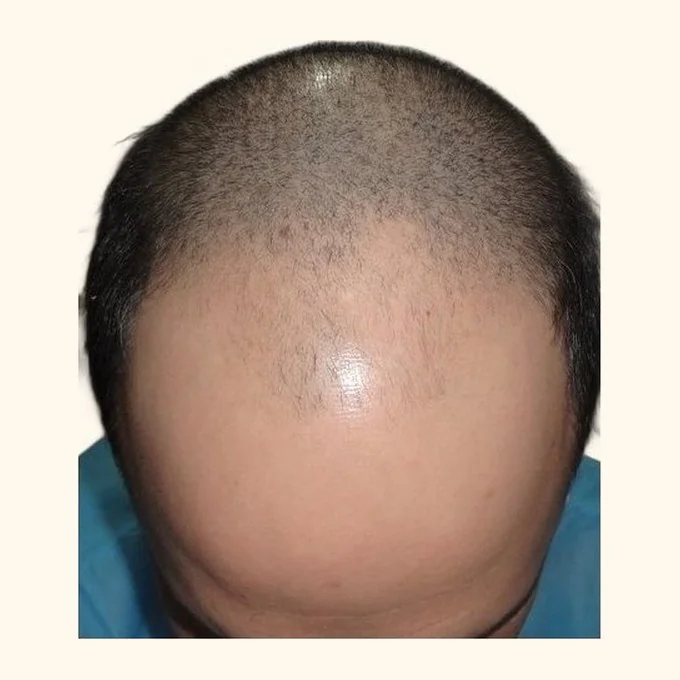
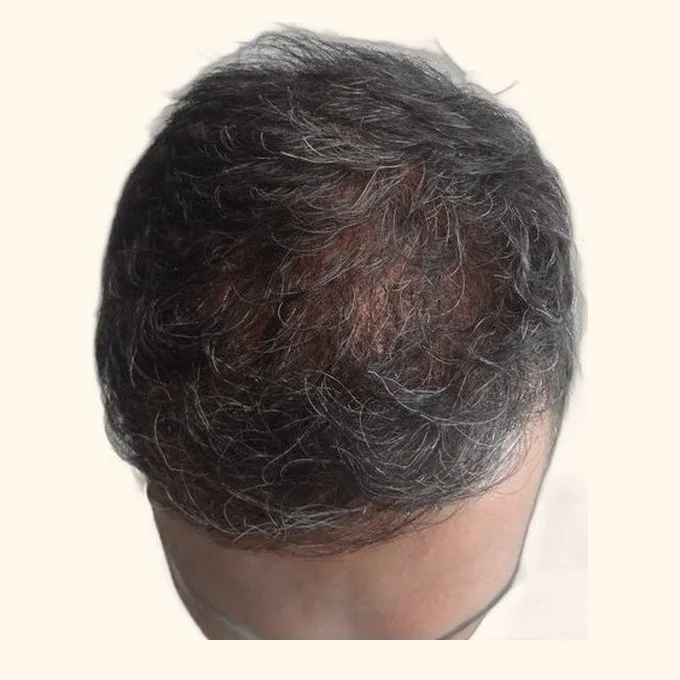
No staged lighting, no undisclosed retouching. Before and after are the same head, the same light, the same camera — honest restoration is the only kind we show.
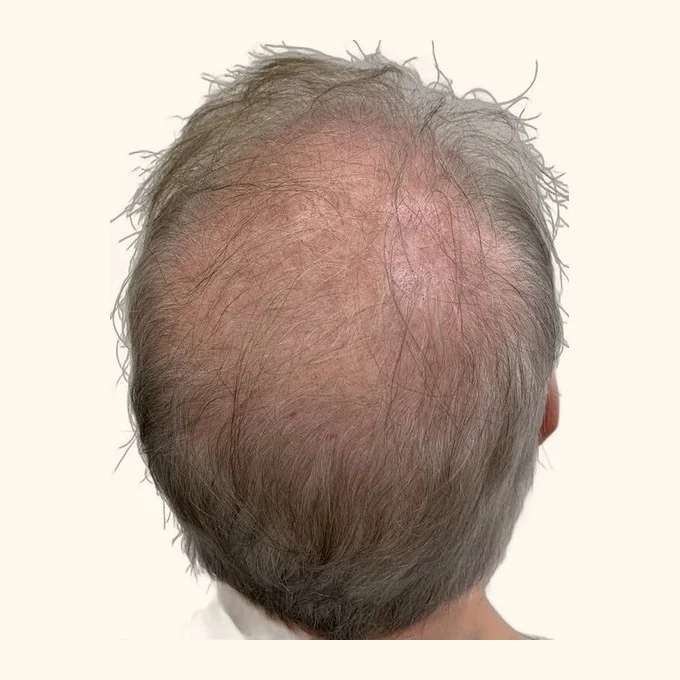
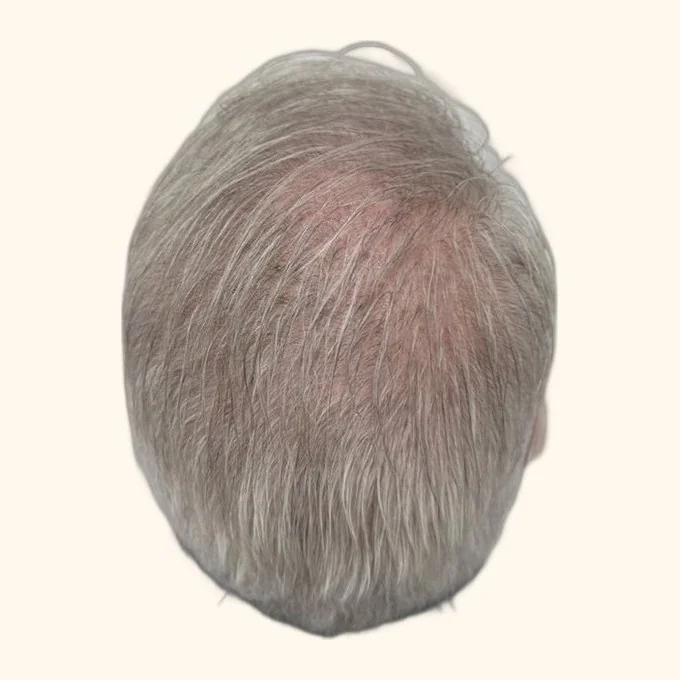 BeforeAfter
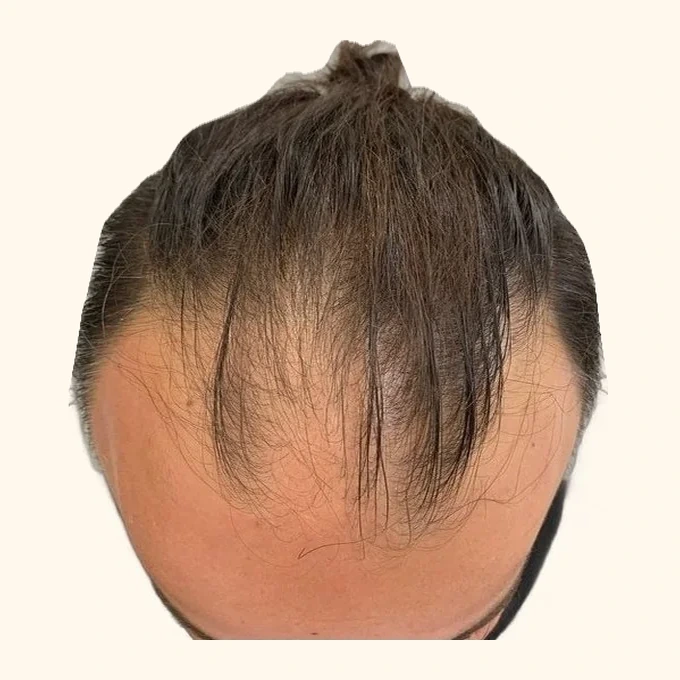
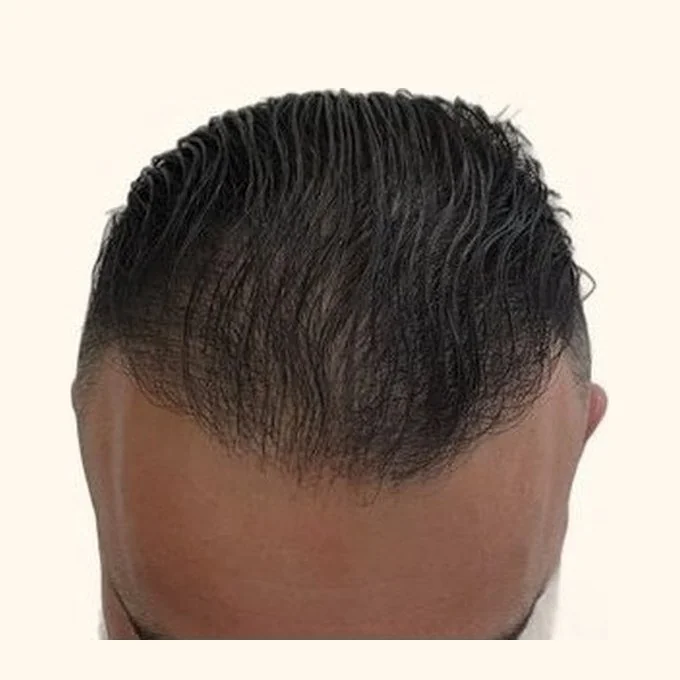 BeforeAfter
 BeforeAfter
Frequently asked
questions.
- Is a hair transplant permanent?
Yes. The relocated follicles retain their genetic resistance to loss and continue to grow in their new position for life. That said, with age most people will lose some hair thickness — a change that naturally affects both transplanted and non-transplanted hair.
- Who performs the surgery at Revio?
Dr. Vézina personally performs every surgical incision: the donor harvesting punches, the recipient sites, and the hairline design. The non-incisional supporting work — extraction, microscope preparation, quality checks, and implantation — is performed by our lead technician under her direct oversight. This is the legally required model in Canada, and the one too many clinics ignore.
- Is the procedure painful?
The procedure is performed under local anesthesia and is not painful. Patients typically describe mild discomfort during the anesthetic injection, and a tight or sensitive feeling for a few days afterward.
- How long is recovery?
Most patients return to non-physical work within a week. Visible scabbing resolves in 7–14 days. Final results take 9–12 months.
- Will I lose my transplanted hair?
Some shedding ("shock loss") is normal in the first weeks. The follicles remain in place. New growth begins around month 3 to 4 and matures by month 12.
- Can I have a hair transplant if I had one elsewhere already?
Often, yes — but it depends on what was done and what donor capacity remains. Dr. Vézina also performs revision and repair procedures for patients who are unhappy with prior results.
- How does Revio's pricing compare to clinics abroad?
Pricing reflects the operating model behind it. At Revio, every surgical incision is performed by a physician — not a technician. Clinics that offer lower prices are typically delivering a different model: technicians making incisions, higher volume, and fewer medical safeguards. Different model, different price.
- Should I take medication (finasteride, minoxidil)?
Medical therapy can help preserve your existing hair and protect your transplant result. Dr. Vézina will discuss what is appropriate for you — and what is not.
Begin in private.
A first consultation with Dr. Vézina is unhurried, confidential, and free of pressure. We look at your scalp, your goals, and your medical context together — you leave with clarity and an honest plan.